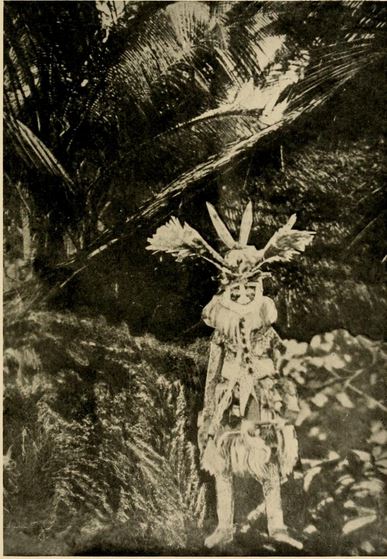
Why headhunting men’s cults develop in lowland riverine rainforest areas

There are many ways that a culture can develop, but some outcomes are more probable than others. Multiple factors make a given belief or cultural practice more likely to spread, such as those that have a salient psychological appeal to many people, or that offer them some utility or personal benefits—at least in the context in which they appear—or that can effectively be maintained by force by self-interested parties, or spread through coercion. Similarly, some environments make certain cultural practices more or less likely to appear, like greater polygyny across cultures being associated with greater female contribution to subsistence, and greater polyandry being associated with greater male contribution to subsistence. Considering two other topics I’ve written about previously, headhunting and men’s cults, I thought it would be interesting to see the ways they co-occur in the ethnographic record, and the environmental characteristics associated with them.

Across the South Coast of New Guinea, there was a ‘cultural package’ that was ubiquitous in the region, which included headhunting raids, sex rituals, male cult secrets, and competitive and exchange feasting. They also often had a ‘dual organization’ social system: anthropologist Bruce Knauft describes it this way in his book South Coast New Guinea Cultures (1993),

On the one hand, individual totem-clans or analogous units within a multi-clan longhouse typically maintained their own longhouse section and fertility shrine of trophies, sacrae, and carved ancestral embodiments. Such a group usually constituted a "single canoe" that could act with some autonomy in subsistence, trading, war-making, alliance, treachery, or relocation. On the other hand, these sub-groups - which can in some ways be glossed as fertility clans (Whitehead 1986) - typically coordinated their efforts with those of the longhouse or territorial group as a whole, which usually also shared a larger spiritual or even patronymic identity. In various forms, this tendency toward residential or political aggregation of diverse local groups characterized the social organization of all south coast societies, but was pronounced in language-culture areas that headhunted most frequently, that is, among Asmat, Marind, Kiwai, and Purari (Knauft 220).

In fact, Knauft also notes a really interesting environmental variable that seems to be associated with this kind of social organization around the world:

Though it would be easy to overstate the connection, lowland riverine rain forest areas such as the Sepik, the New Guinea south coast, parts of insular southeast Asia, and the Amazon basin all supported at least some groups that lived in sizable men's houses, developed elaborate dual organization, and practiced headhunting. Few other areas of the world are known to have exhibited this particular cluster of traits. All these propensities were largely or virtually absent in highland New Guinea (Knauft 220).

This is an intriguing pattern, but before it can be addressed a point must be made about the nature of headhunting. Headhunting, quite often, is an incredibly intimate act. Cutting someone’s head off, possessing it, treating it with chemicals, braiding its hair, or defleshing it, putting it on display, keeping it as a family heirloom—the relationship between headhunter and head is often a deeply personal one. When alive, the head itself has a profound and enduring psychological attraction, so the choice of victim can be considered quite important. As I wrote previously:

Many scholars have remarked on the impressive size and abilities of the human brain, but few have understood the otherworldly allure of the human head. The head is the focal point of social interaction in life – its center of attention is communicated through its eyes, meaning is conveyed by its facial expressions, and language is emitted from its mouth, heard by its ears and interpreted by its brain. In death, it may be no less important; often functioning as an object of veneration or a trophy to be secured by the enemies of its owner.

Now, let’s look at headhunting and its ritual significance among the Asmat hunter-gatherers of New Guinea:

The heads acquired are intended for the initiation of sons and younger brothers, nephews and cousins. At times it is hard for a hunter to decide who is to be favored. All the different sections of the village, grouped around the bachelors’ houses, have claims and those who have treated the others expect a feast in return. Often the claims of the different clans would lead to altercations and sometimes to bloodshed. On such occasions the corpses of the headhunting victims would be the subject of fights, would be taken and retaken by the different factions. It has happened that village unity has been permanently damaged by such fights.

A couple important elements here: first, the heads are a ‘currency’ which older males use to ‘pay’ for the initiation of their young male relatives into the men’s group. Second, multiple clans often cooperate on these headhunting expeditions, and thus fight over the spoils (though fights over the spoils can also reflect feasting dynamics, gifts owed, or existing social conflicts, so it’s more complex than just a direct fight over the head alone). Third, acquiring heads benefits the men who seize them, as well as their lineage through initiating their relatives. They also can benefit the wives of successful headhunters: “The beheaders of the victims are sometimes the wives of the headhunters. This is one way in which a greater warrior, tesumejipic, enables his wife also to become tesumaj, great.” Headhunting is also wrapped up in feuding dynamics between groups, with headhunts generating reciprocal revenge raids after each attack. Asmat religious beliefs associated with ceremonial cycles requiring heads also played a role in headhunting practices.

There is one final element worth emphasizing about Asmat headhunting, which is how it was connected to complex cultural beliefs about identity:  

The informants emphasized repeatedly that the initiate is smeared with the ash of the burnt hair and with the blood of the victim. This is explained by the fact that the initiate assumes the name of the victim. This identity between victim and initiate will later prove very useful. When meeting the initiate, even after many years, relatives of the murdered person will always call him by his assumed name, the victim’s name, and treat him as their relative. They dance and sing for him and give him presents. It is strictly forbidden to kill people from other villages who, because of their ritual names, are related to one’s village. These people are often chosen to be negotiators.

It’s worth repeating that the initiate given the name in these ceremonies did not kill the victim himself, but it was likely an older male relative of his that did so. The relatives of the victim embracing someone who is essentially their enemy is quite striking: though of course, they probably didn’t see it that way. The designation of the name meant that some aspect of the spirit of the headhunting victim was from then on associated with the initiate, making the relatives’ embrace of the individual from the enemy group perfectly sensible. While they may have sought revenge against the group and the individual who did the killing, the young man who received their dead relative’s name represented a piece of him living on, and thus warranted being treated as kin.

Now, using the broader pattern identified by Knauft, and the Asmat case study, let’s try to put together some of the socioecological factors at play in the general headhunting/men’s cult complex:

1) In an environment of chronic raiding, aggregating together into larger groups provides protection and offers advantages in intergroup conflict. Because of this, multiple semi-autonomous clans come together to cooperate, and work together in headhunting raids.

2) Among small-scale populations without the wheel or horses, travel over land is relatively slow, but waterways can offer rapid and distant journeys. For groups living near navigable rivers, and where people may use canoes to travel to fish or visit relatives, you can have extensive interactions between even relatively remote groups. Knauft writes that, “In coastal and riverine areas where major settlements were far apart but readily accessible, an approach-avoidance fascination with a distant enemy was ripe for cultural and symbolic elaboration in headhunting.”

3) When resources are clumped together spatially, they can be more easily monopolized by coalitions exercising force, and tend to be a prime source of conflict between groups. In the Asmat case, control of rich sago patches and desirable fishing grounds were an impetus for many political alliances as well as a significant source of conflict.

4) Points 1 and 3 intersect in Asmat foraging practices, where men would patrol and protect women while they worked. Anthropologist David Eyde writes that;

It used to be the case that an entire village or men's house group of a village would usually go to the sago or fishing areas together. Such an outing provided protection for the entire group. Good warriors would remain in canoes up and downstream from the area where the group was working. They would give warnings if the enemy approached. Other men accompanied the women into the forest to help with the work, but especially to protect them from ambush. In doing all this, old people and young children were sometimes left without adequate protection in the village, where they were prey to surprise attacks.

5) Sago patches are important to control because individual men and clans can gain prestige from hosting large feasts. The sago is extracted and processed largely by women, and men gain status (and reproductive benefits), by having multiple wives to work the sago for later feasting.

6) Where most of the subsistence is procured or produced by women, men are more likely to spend their time engaged in warfare. As F.W. Up De Graff wrote of the Jivaro in the Amazon, another lowland riverine rainforest society that engaged in headhunting; “The work is divided very unevenly between the sexes, the larger share falling to the lot of the women. They do the cooking, spinning, packing, and have the care of the plantations…The men are before everything else warriors--the protectors of their womenfolk from the raids of neighbours.”

7) Strong intergroup competition means groups that are more effective at inducing cooperation among males for purposes of collective violence are more likely to survive, and thrive, thus the men’s houses and rituals which are often used to induce solidarity and teach men valuable skills such as conduct in war. The dual organization system allows for wider cross-cutting alliances between clans to cooperate in war.

8) The chronic ‘frenemy’ dynamic between groups, of temporary alliances, conflict, revenge, and then self-identification of the enemy through headhunting and male initiates assuming the name of the dead (for more on name taboos across cultures, see here). This new identity can be useful in negotiating between hostile groups, potentially reducing enmity and forming new alliances advantageous in war. A similar dynamic can be seen, once again, among the Jivaro. Anthropologist Henning Siverts writes that,

Although they form a linguistic and cultural entity—an ethnic group—they do not constitute a TRIBE if we take tribe to mean a permanent political group or corporation. The Jivaro are rather an aggregate of neighborhoods called jivarias in Ecuador and caserios in Peru, whose members consider each other as ceremonial foes or temporary allies within an all-embracing kin- and affinal network. As headhunters they recognized only Jivaro heads as worth taking and shrinking into /¢an¢a/ to be displayed and celebrated at the great victory feast following a successful headhunting expedition. In other words, a Jivaro is a potential /¢an¢a/ while all others, including the white people are just foreigners.

To repeat and summarize, in this region 1) women procure most of the subsistence, 2) this allows men to spend more time pursuing status, particularly in the realm of warfare and headhunting, 3) heads are used to initiate younger male relatives into the men’s group, benefiting an individual man, his clan’s prestige, and potentially his wife or wives, 4) settlements placed next to rivers and the use of canoes allows greater contact between distant groups, for good and for ill, 5) settlement placement affects competition for forest resources like sago, and desirable fishing territory on rivers, 6) kin groups/clans form alliances for defense/war/resources/marriage/rituals, 7) alliances can be fragile, temporary, subject to treachery due to conflicts of interest between clans, and between individual clans and the larger social unit, 8) warfare is personal and endemic between clans and rival camps, leading to associated beliefs about headhunting and the nature of identity, which regulate and make sense of conflict, 9) men’s houses, male cult secrets and rituals which increase male solidarity likely increase success in war.

There’s still a lot more worth discussing on this topic, so I might build off this in a future post.

Academic Resources

This page contains a list of primarily anthropological, but also general social science resources—books, papers, films, and other relevant materials—that I consider informative, or have otherwise enjoyed. I do not necessarily endorse everything in these—or any—works other than my own, but I consider everything on here worth checking out. Links are offered where materials are publicly available. This list will likely be expanded considerably in the future.

Book recommendations

I have broken these recommendations up into categories based on similarities these works share in terms of modes of analysis/theoretical framework and time.

Early Comparative (1890’s-1950’s)

Teutonic Mythology (1835) by Jacob Grimm

The History of Human Marriage (1891) by Edward Westermarck

Slavery as an Industrial System (1900) by H.J. Nieboer

Primitive Secret Societies (1908) by Hutton Webster

Totemism and Exogamy [volumes I-IV] (1910) by James Frazer

Our Primitive Contemporaries (1934) by George Peter Murdock

Early Quantitative (1940’s-1970’s)

Social Structure (1949) by George Peter Murdock

The Status of Women in Preindustrial Societies (1978) by Martin King Whyte

Late Comparative (1970’s-Today)

Manhood in the Making (1990) by David Gilmore

Sick Societies (1992) by Robert B. Edgerton

The Lifeways of Hunter-Gatherers (1995) by Robert L. Kelly

Headhunting and the Body in Iron Age Europe (2012) by Ian Armit

The Creation of Inequality (2012) by Kent Flannery and Joyce Marcus

The Power of Ritual in Prehistory (2018) by Brian Hayden

Late Quantitative (1980’s-Today)

Constructing Frames of Reference: An Analytical Method for Archaeological Theory Building Using Ethnographic and Environmental Data Sets (2001) by Lewis Binford

Papers

Apostolou, M. 2007. Sexual Selection Under Parental Choice: The Role of Parents in the Evolution of Human Mating. Evolution and Human Behavior.

Apostolou, M. 2010. Sexual selection under parental choice in agropastoral societies. Evolution and Human Behavior.

Glowacki, L. & Wrangham, R. 2013. The Role of Rewards in Motivating Participation in Simple Warfare. Human Nature.

Glowacki, L. & von Rueden. 2015. Leadership solves collective action problems in small-scale societies. Phil. Trans. R. Soc. B.

Glowacki, L. & Wrangham, R. 2015. Warfare and reproductive success in a tribal population. PNAS.

Jaeggi, A.V. et al. 2016. Obstacles and catalysts of cooperation in humans, bonobos, and chimpanzees: behavioural reaction norms can help explain variation in sex roles, inequality, war and peace. Behaviour.

Knauft, B. 1987. Reconsidering Violence in Simple Human Societies. Current Anthropology.

Marlowe, F. 2003. The Mating System of Foragers in the Standard Cross-Cultural Sample. Cross-Cultural Research.

Marlowe, F. 2005. Hunter-Gatherers and Human Evolution. Evolutionary Anthropology.

Rodseth, L. 2012. From Bachelor Threat to Fraternal Security: Male Associations and Modular Organization in Human Societies. International Journal of Primatology.

Rosaldo, M.Z. 1974. ‘Woman, Culture and Society: A Theoretical Overview’ in M.Z. Rosaldo and L. Lamphere (eds) Woman, Culture and Society. Stanford: Stanford University Press.

Sahlins, M. 1963. Poor Man, Rich Man, Big-Man, Chief: Political Types in Melanesia and Polynesia. Comparative Studies in Society and History.

Singh, M. 2018. The cultural evolution of shamanism. Behavioral and Brain Sciences.

Smuts, B. 1992. Male aggression against women: an evolutionary perspective. Human Nature.

Walker, R.S. et al. 2011. Evolutionary History of Hunter-Gatherer Marriage Practices. PLoS One

Wrangham, R. & Glowacki, L. 2012. Intergroup Aggression in Chimpanzees and War in Nomadic Hunter-Gatherers: Evaluating the Chimpanzee Model. Human Nature.

20th Century Ethnography

The life of the Copper Eskimos (1922) by Diamond Jenness

The Tiwi of North Australia (1960) by CWM Hart and Arnold Pilling

Tiwi wives: a study of the women of Melville Island, North Australia (1971) by Jane Goodale

Chronicle of the Guayaki Indians (1972) by Pierre Clastres

Women of the Forest (1974) by Yolanda and Ryan Murphy

The !Kung of the Nyae Nyae (1976) by Lorna Marshall

Drama and Power in a Hunting Society: The Selk'nam of Tierra del Fuego (1981) by Anne Chapman

Masked Rituals of the Kodiak Archipelago (1995) by Dominique Desson

Ache Life History (1996) by Kim Hill and Ana Magdalena Hurtado

The Cassowary’s Revenge (1997) by Donald Tuzin

21st Century Ethnography

Forest hunter-gatherers and their world: a study of the Mbendjele Yaka pygmies of Congo-Brazzaville and their secular and religious activities and representations (2002) by Jerome Lewis

The Hadza (2010) by Frank Marlowe

Cross-Cultural Volumes (1980’s-Today)

Rituals of Manhood (1982) edited by Gilbert Herdt

Gender in Amazonia and Melanesia: An Exploration of the Comparative Method (2001) edited by Thomas Gregor and Donald Tuzin

Human Behavioral Ecology/Sociobiology (1980’s-Today)

Despotism and Differential Reproduction: A Darwinian View of Human History (1983) by Laura Betzig

Homicide (1988) by Martin Daly and Margo Wilson

The Origin of War: The Evolution of a Male-Coalitional Reproductive Strategy (1995) by J.M.G. van der Dennen.

Why Sex Matters: A Darwinian Look at Human Behavior (2000) by Bobbi S. Low

Adaptation and Human Behavior (2000) edited by Lee Cronk, Napoleon Chagnon, and William Irons

Mammalian Behavioral Ecology/Primatology (1980’s-Today)

Primeval Kinship (2008) by Bernard Chapais

Mammal Societies (2016) by Tim Clutton-Brock

Chimpanzees and Human Evolution (2017) edited by Martin Mueller, Richard Wrangham, and David Pilbeam

General Social Science/History/Biography

The Campaigns of Napoleon (1966) by David G. Chandler

Coup d'Etat: A Practical Handbook (1968) by Edward Luttwak

Women’s Work: The First 20,000 Years (1994) by Elizabeth Wayland Barber

Understanding Early Civilizations (2003) by Bruce Trigger.

Codes of the Underworld (2009) by Diego Gambetta

Ethnographic Films

The Hunters (1958) Part 1 and Part 2

Dead Birds (1963) —12 minute clip

—The book Gardens of War (1968) by Robert Gardner, the anthropologist who made the film, is also worth checking out.

A Man Called “Bee”: Studying the Yanomamo (1975)

Fictionalized ethnographic films

In The Land of the Headhunters (1914)

Nanook of the North (1922)

Cannibal Tours (1988)

The Human Systems and Behavior Lab

Publications

Omo Valley Culture and Behavior Project

Cross-Cultural Databases

D-PLACE – Database of Places, Language, Culture, and Environment

Standard Cross-Cultural Sample Codebook

Ethnographic Atlas Codebook

Sex, Revenge, and the Social Fabric

The imperious drive of sex is capable of impelling individuals, reckless of consequences while under its spell, toward behavior which may imperil or disrupt the cooperative relationships upon which social life depends. The countless interpersonal bonds out of which human association is forged, complex and often delicately balanced, can ill suffer the strain of the frustrations and aggressions inevitably generated by indiscriminate competition over sexual favors. Society, therefore, cannot remain indifferent to sex but must seek to bring it under control – George Murdock, Social Structure, 1949

nam fuit ante Helenam cunnus taeterrima bellī causa – Horace, Satires, 35 BC

Social living necessarily entails certain conflicts of interest. All societies require norms and institutions to sustain general peace and cooperation among its population, as within even the most cohesive groups individuals’ needs and preferences will frequently diverge. Often, such conflicts will occur in domains that are quite comprehensible; over resources, status and personal relationships, or reproductive matters. By necessity, every surviving society developed cultural traditions (with variable success) to regulate behaviors of significant social consequence—like theft or violence—and few behaviors are more consequential than the act of sex.

Some of the ways that sex is regulated appear to be universal, or nearly universal, across cultures. All societies have particular taboos regarding incest, for example. I know of no traditional small-scale societies where sexual relationships or marriage between a parent and a child, or between siblings, is considered socially acceptable (though there are some examples from large-scale historical societies, such as in ancient Egypt). Psychologist Norbert Bischof notes that “Exceptions to this rule are extremely rare, when they do occur it is mostly a) in the form of privilege of small groups (e.g. royal families), or b) in conjunction with certain rituals.” There is some reason to think this near universality of the incest taboo may at least partially stems from certain biological foundations, as inbreeding avoidance is well documented across a wide variety of animal species.

On the other hand, the incest taboo is often simply one part of a larger system for classifying kin and mediating social relationships. Long-standing social traditions tell you whose name, and perhaps property, you inherit, who your close and distant relatives are, who you are allowed to—or forbidden from—marrying or mating with, and what will happen to your own name and property when you die. Such social proscriptions are not always followed, of course, but these kind of traditions represent guidelines for navigating complex social dilemmas, even if they are not always optimal ones. When we look at the most common social norms and traditions across cultures, we might expect that the most widespread practices tell us not only something about the biological foundations of human behavior, but also the common ways social systems have evolved to regulate conflict.

In all societies, people form pair bonds, and in most societies the pair bond, often formally recognized through marriage, comes with the presumption of significant or complete sexual exclusivity. In his work Social Structure (1949), anthropologist George Murdock remarks that, “Taboos on adultery are extremely widespread,” noting that they appear in 120 of the 148 societies in his sample, and that even among most of the 28 exceptions it is only conditionally permitted by special circumstances, such as ‘wife lending’ between male allies. Adultery is also widely viewed with moral disapproval across modern nation states. A 2014 Pew Research survey found that a median of 78% of people across 40 nations considered a married person having an affair to be morally unacceptable, and only 7% of people considered it morally acceptable. This raises the question of why adultery should be such a widely condemned behavior across a diverse array of societies.

To some degree, this probably reflects underlying human instincts towards pair bonding and mate guarding: in other words, people are opposed to cheating because they don’t want to be cheated on. At the same time, this doesn’t necessarily explain why people would care about other people cheating on each other. For this, we might want to consider the effects that adultery—and unrestrained competition for mates in general—can have on a social group.

In Despotism and Differential Reproduction (1983) anthropologist Laura Betzig cites a significant amount of ethnographic evidence demonstrating the link between violent conflict and sex—particularly in men’s attempt to obtain and control it;

Notoriously, the major precipitating cause of club fights among the Yanomamo is: conflict over women (e.g., Chagnon, 1983:119). Disputes over women “stand apart” among modern Turks, invariably calling for violence (Stirling, 1965:270); elopements may lead to physical fighting among the Mohla in the Western Punjab (Eglar, 1960:18); adultery is regarded as the most serious crime among the Semang (Schebesta, 1928:22-80); and over 90% of Tiwi disputes were matters in which women were somehow involved (Hart and Pilling, 1960:90). Among Kapauku, Pospisil noted that most Wars start because of violations of a husband’s exclusive sexual rights (1958:167); Linton found Marquesan killings followed two motives: sexual jealousy and revenge (1939:21-76). Among the Saramacca of the upper Suriname River basin, quarrels over women were more frequent than any other kinds of disputes (Kahn, 1931:97); and among Trumai, “the chief source of conflict in the village was sex” (Murphy and Quain, 1955:58).

Independent of direct fights over access to women or adultery, males may also behave violently—either opportunistically, or in more formal, socially appropriate contexts—to signal their courage, status, ability to protect, or other desirable qualities in order to attract coalition partners and marriageable women. Anthropologist DA Turton noted that among the Mursi pastoralists of Ethiopia that, “There is no doubt that dueling is associated, first and foremost, with unmarried men... [they] are highly motivated to take part in ceremonial dueling because it is the principal culturally valued means by which a young man seeks to attract the attention of unmarried girls.” Dueling systems like these may be one way of regulating in-group male-male competition in a less socially costly fashion than if it were expressed in less restrained ways. Conversely, it may promote and help maintain more aggressive behaviors that a society might otherwise want to keep in check.

Sometimes women may implicitly or explicitly encourage such violent behavior on the part of the men, particularly when it is directed against outsiders. Ethnologist Charles Hose writes that, “The Iban women urge on the men to the taking of heads; they make much of those who bring them home, and sometimes a girl will taunt her suitor by saying that he has not been brave enough to take a head; and in some cases of murder by Sea Dayaks, the murderer has no doubt been egged on in this way.” Similarly, anthropologist Bruce Knauft notes that among the Asmat of New Guinea, “women disparaged and were loath to marry men who had not proven themselves by taking heads in warfare.” In The Cattle Brings Us To Our Enemies (2010), anthropologist J. Terence McCabe writes that, “Young women will sing songs about young men who are successful raiders, and such individuals often receive the benefits of their adulation.”

The pursuit of sex can be a motivator to engage in violence, and successful application of force to obtain social or political power may provide extensive reproductive benefits. In their paper ‘The evolutionary foundations of revolution’, sociologist Joseph Lopreato and F.P.A. Green write that, “ruling powers, including successful revolutionaries and their entourage, typically have sexual access to a disproportionate number of mates and therefore contribute an extraordinary number of offspring, legitimate or otherwise, to the population pool.” The reproductive benefits that can be conferred to males through conquest and the acquisition of power are also reflected in genetic data. In his book Who We Are and How We Got Here (2016), geneticist David Reich notes a common trend of sex-biased admixture across many human populations, writing that, “This pattern of sex-asymmetric population mixture is disturbingly familiar... the common thread is that males from populations with more power tend to pair with females from populations with less.”

Of course, while fitness considerations are key to understanding why sex should be such a prime source of conflict—as I discussed here, here, here, and here—there is also a social process at work that requires explanation: namely why sexual violations should be so commonly met with an act of revenge.

Anthropologists have long known that reciprocity is an important mechanism governing cooperation in many traditional societies. In his classic work The Gift (1925), Marcell Mauss writes that,

In the economic and legal systems that have preceded our own, one hardly ever finds a simple exchange of goods, wealth, and products in transactions concluded by individuals. First, it is not individuals but collectivities that impose obligations of exchange and contract upon each other. The contracting parties are legal entities: clans, tribes, and families who confront and oppose one another either in groups who meet face to face in one spot, or through their chiefs, or in both these ways at once. Moreover, what they exchange is not solely property and wealth, movable and immovable goods, and things economically useful. In particular, such exchanges are acts of politeness: banquets, rituals, military services, women, children, dances, festivals, and fairs, in which economic transaction is only one element, and in which the passing on of wealth is only one feature of a much more general and enduring contract. Finally, these total services and counter-services are committed to in a somewhat voluntary form by presents and gifts, although in the final analysis they are strictly compulsory, on pain of private or public warfare

Of course, there is a corollary to this, which is that the logic of reciprocity will also, on occasion, demand retribution. Thus, “To refuse to give, to fail to invite, just as to refuse to accept, is tantamount to declaring war; it is to reject the bond of alliance and commonality.” Anthropologist Ernst Halbmayer notes that among the Yukpa horticulturalists of northwest Venezuela, the various subgroups, “generally see each other as enemies... Their relations have been characterized by negative reciprocity, war and wife-stealing.”

Revenge and fights over women and sex are the prime motives for warfare across Amazonia. Anthropologists Robert S. Walker and Drew H. Bailey write that,

In order of importance, the tallied motives for killings (including multiple responses) were revenge for previous killings or other wrong-doings like adultery or sorcery (n=63 or 70% of responses), jealousy over women (n=16 or 18% of responses), gain of captive women and children (n=6 or 7% of responses), fear or deterrence of an impending attack (n=3 or 3% of responses), and lastly the theft of material goods (n=2 or 2% of responses).

In 54% of the external raids recorded in Walker and Bailey’s sample, at least one woman was captured.

This social logic of negative reciprocity, which may perpetuate long-running feuds between groups, also often leads men to take extreme measures to protect their honor and status within their group. In his book Blood Revenge (1984), anthropologist Christopher Boehm writes that, “To fail to retaliate homicidally in many contexts used to result in severe damage to one’s honor, in that the disapproval of the tribal moral community was so intense that it became almost intolerable.” Boehm noted that most feuding between families among the Montenegrins began with an insult to honor, and that the commonly noted causes are “abduction of a maiden to marry her, seduction of maidens, adultery, runaway wives, and a breach of betrothal agreements, as well as disputes over pastures.”

Anthropologist E. Adamson Hoebel writes that, “A Comanche male who had suffered a legal wrong was under social obligation to take action against the offender. For a man not to do so was not looked upon as an act of social grace; indeed, such behavior was a social disgrace.” As if to drive home what one of the most consequential wrongs a man could suffer was, Hoebel adds that, “Adultery and taking another's wife were direct attacks upon the prestige of the wife's husband. Both acts were unmistakable challenges which could not be ignored by the man who would maintain enough face to make life livable.”

In his book on the Yanomami, anthropologist Napoleon Chagnon gives an example of the way a man unable to protect his honor by force might expect to be treated in some societies;

Although Rerebawä has displayed his ferocity in many ways, one incident in particular illustrates what his character can be like. Before he left his own village to take his new wife in Bisaasi-teri, he had an affair with the wife of an older brother. When it was discovered, his brother attacked him with a club. Rerebawä responded furiously: He grabbed an ax and drove his brother out of the village after soundly beating him with the blunt side of the single-bit ax. His brother was so intimidated by the thrashing and promise of more to come that he did not return to the village for several days. I visited this village with Kaobawä shortly after this event had taken place; Rerebawä was with me as my guide. He made it a point to introduce me to this man. He approached his hammock, grabbed him by the wrist, and dragged him out on the ground: “This is the brother whose wife I screwed when he wasn’t around!” A deadly insult, one that would usually provoke a bloody club fight among a more valiant Yanomamö. The man did nothing. He slunk sheepishly back into his hammock, shamed, but relieved to have Rerebawä release his grip (Chagnon 31).

Of course, we can also think of the ways the logic of negative reciprocity may successfully prevent some conflicts. If you know with a great deal of certainty that any social violation on your part will be met with extreme retribution, you may be less likely to act out in the first place.

Absent social norms and institutions that enable effective conflict prevention and resolution, a never-ending game of tit-for-tat becomes an increasingly likely outcome.

The Politics of Chimpanzee Societies

Book Review: The New Chimpanzee by Craig Stanford. Harvard University Press. 2018.

In his 1982 book Chimpanzee Politics, primatologist Frans de Waal made the then-provocative argument that much of human’s political behavior stems from the evolutionary heritage we share with chimpanzees. Describing the similarities humans have in common with chimps in domains such as coalition building, status competition, and sex differences, de Waal concluded that, “What my work [studying chimpanzees] has taught me…is that the roots of politics are older than humanity.”

In The New Chimpanzee (2018), anthropologist Craig Stanford offers a worthy successor to de Waal’s classic, integrating the latest research to expound not just on the many similarities we share with our relatives of the forest, but their own unique traits and behaviors as well. While Stanford does an admirable job of conveying just how fascinating and distinct chimpanzees are in their own right, it is nonetheless striking how humanlike many of their behaviors seem to be.

Following de Waal, Stanford gives particular attention to chimpanzee status competition and ‘political’ behavior. Stanford notes that male chimpanzees that are higher ranked in dominance hierarchies have better reproductive success (more children) and live longer than lower ranked males, and he connects this to research in humans showing that higher status males also tend to be healthier and have greater reproductive success. Stanford suggests that “there might be an ancient origin for the relationship between human life expectancy and social status.” This may be due to direct effects, such as access to better nutrition, or “it could also be due to indirect effects: being high ranking may carry psychological perks that promote long, healthy lives,” Stanford writes.

Some of the similarities Stanford describes when it comes to political behavior end up being quite humorous. Stanford tells the story of the alpha chimpanzee, Ntologi, who lived at Mahale National Park in Tanzania. Stanford writes that Ntologi, “shared meat liberally as he rose in rank.” However, once he achieved alpha status, Ntologi’s “generosity dropped, and he began sharing meat mainly with those whose political support he still needed most.” This behavior so closely mirrors that of many of our own politicians it feels almost cliché. Political leaders supplying resources or favors to allies to maintain their support is well documented in social science research. In their 2003 book The Logic of Political Survival, political scientist Bruce Bueno de Mesquita and his colleagues write that “The survival of leaders and of the institutions or regimes they lead is threatened when they are no longer able to provide sufficient resources to sustain political support.”

As with humans, no single chimpanzee can maintain power on their own. Stanford writes that, “In my own field studies, there was always a single alpha male, but his power at a given moment was highly dependent on those around him.” For humans, the authors of The Logic of Political Survival write, “Make no mistake about it, no leader rules alone. Even the most oppressive dictators cannot survive the loss of support among their core constituents.” It’s difficult not to be impressed with how strategic, and even rational, chimpanzee political behavior and status competition is.

Similarly, we see strategic elements in chimpanzee hunting behavior. Chimpanzee males at many sites engage in cooperative hunts, seeking out prey such as red colobus monkeys. At the site of Ngogo at Kibale National Park in Uganda, Stanford writes that, “Male bonding and male efforts to rise in rank by currying favor with the right higher-up were major motivating forces in obtaining meat in the first place.” More than simply seeking out subsistence, hunting for male chimpanzees is often part of building alliances and jockeying for political power.

There is a risk when studying chimpanzees in ascribing uniquely human characteristics and behaviors onto them. Yet learning about chimpanzees can lead us to greater insight in understanding our own behaviors and evolutionary history. Sensitive to these issues, de Waal writes that, it would not “be correct to accuse me of having, either consciously or unconsciously, projected human patterns onto chimpanzee behavior. The reverse is nearer the truth; my knowledge edge and experience of chimpanzee behavior have led me to look at humans in another light.” While Stanford gives appropriate emphasis to our similarities with chimps, he also gives due attention to how intriguing chimpanzees are in their own right, writing that he hopes “readers will appreciate chimpanzees for what they are— not underevolved humans or caricatures of ourselves, but perhaps the most interesting of all the species of nonhuman animals with which we share our planet.”

Stanford concludes by noting that chimpanzees act “as ambassadors between our own evolutionary history as apes and our present selves, the technologically advanced humans of this century who grow more divorced from our heritage with each passing generation.” Chimpanzees are an impressive species: fundamentally unique, while also offering us an avenue to better understand ourselves and our own history. For those interested in learning about chimpanzees and their relationship to humans, Stanford’s work is bound to satisfy.

Editor’s note: This article was first published in French at Phébé par Le Point.